
News
Popular keywords
News
Current Location:Home >News>Industry NewsA Study on the Oxygenation Effect of Wave Surge Machines in Litopenaeus vannamei Farming
Dissolved oxygen is essential for the normal metabolism and growth of shrimp, and is a primary condition for their survival.
In Litopenaeus vannamei farming, the dissolved oxygen level should ideally be no less than 3 mg/L. Under high-density shrimp farming conditions, dissolved oxygen often fails to meet the normal growth requirements of shrimp. Therefore, various aeration machines are widely used. Currently, the most widely used aeration machines in shrimp farming are paddlewheel aerators and impeller aerators.
Paddlewheel aerators have a power efficiency of 0.9-1.32 kg/kW·h. They have strong propulsion and mixing capabilities in the upper and middle water layers, effectively increasing dissolved oxygen in the upper and middle water layers of ponds. Furthermore, they generate directional water flow during operation, which helps to concentrate waste and uneaten feed, facilitating waste removal.
The impeller aerator has a power efficiency of 1.14-1.85 kg/kW·h and possesses strong mixing and lifting capabilities throughout the water body, simultaneously increasing dissolved oxygen at different depths and water layers. Studies by Gu Jian et al. have shown that the overall oxygenation performance of the impeller aerator is higher than that of waterwheels and propellers, with average oxygenation rates of 1.425 mg/L·h and 0.398 mg/L·h respectively in ponds. However, research by Bao Haiyan et al. indicates that impeller aerators have drawbacks in Litopenaeus vannamei (whiteleg shrimp) farming, including poor oxygenation on cloudy or rainy days, some mechanical damage to the shrimp, and high energy consumption. Zhou Huizhong et al. conducted a comparative experiment on the oxygenation effects of impeller and waterwheel aerators in Litopenaeus vannamei shrimp farming, showing that the waterwheel aerator improved the oxygenation effect by 103.8% compared to the impeller aerator, saving an average of 50.16 yuan in electricity costs per mu (approximately 0.067 hectares).
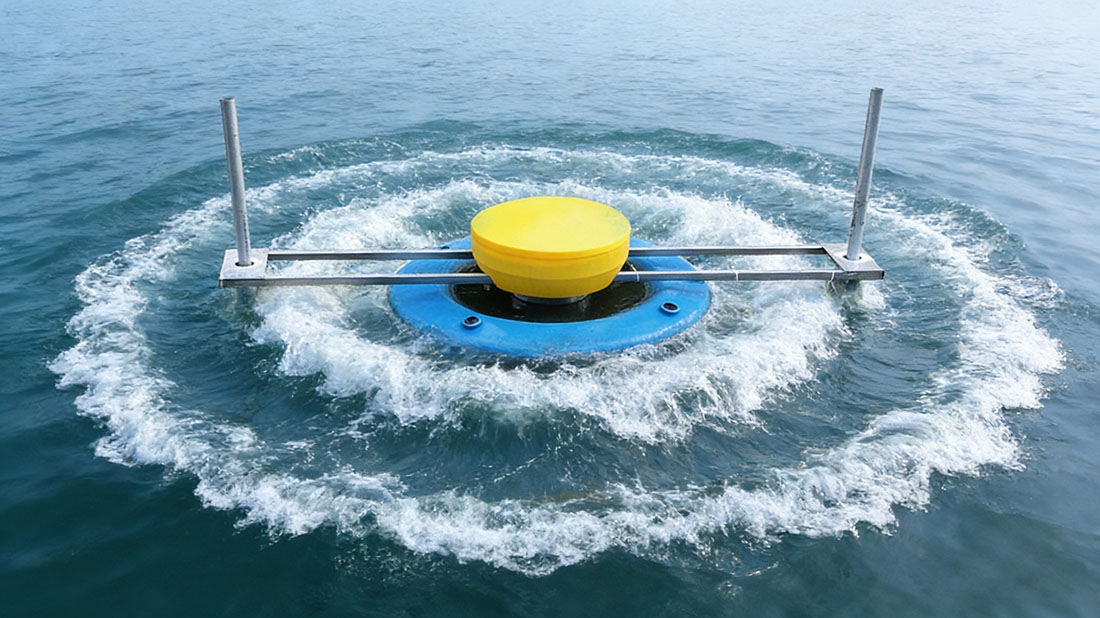
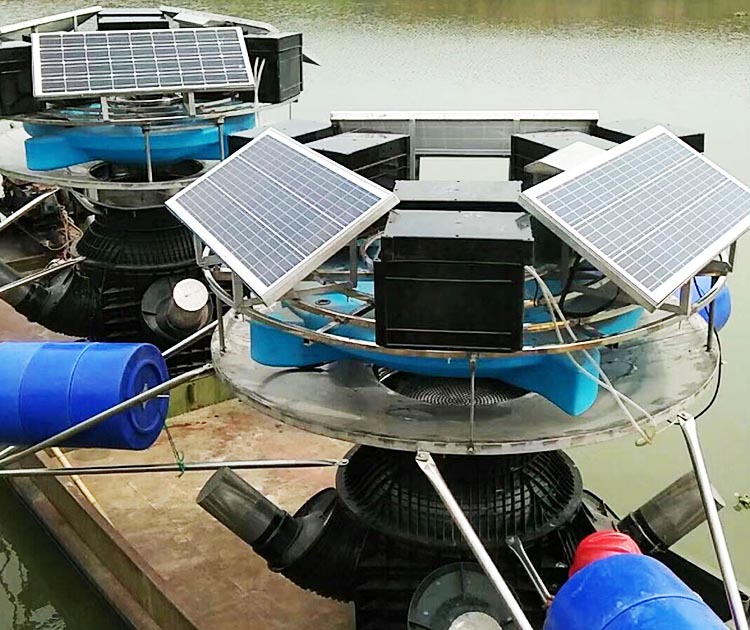
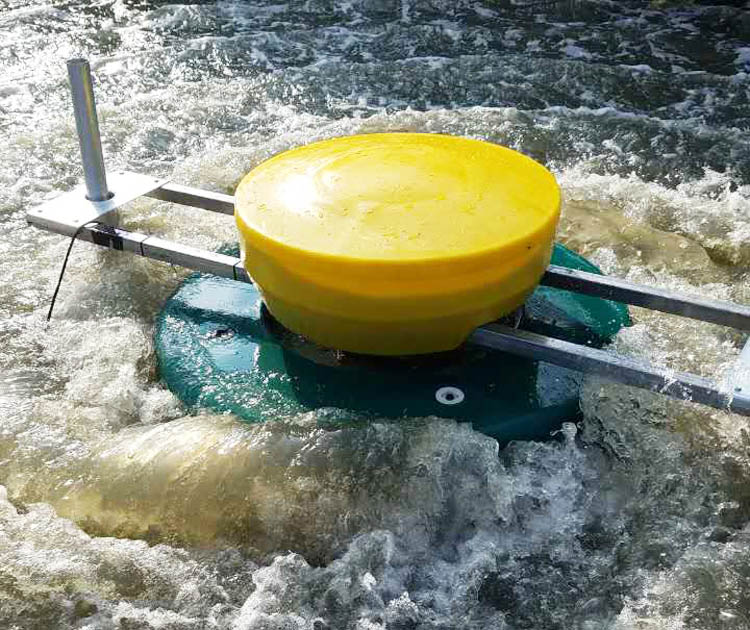
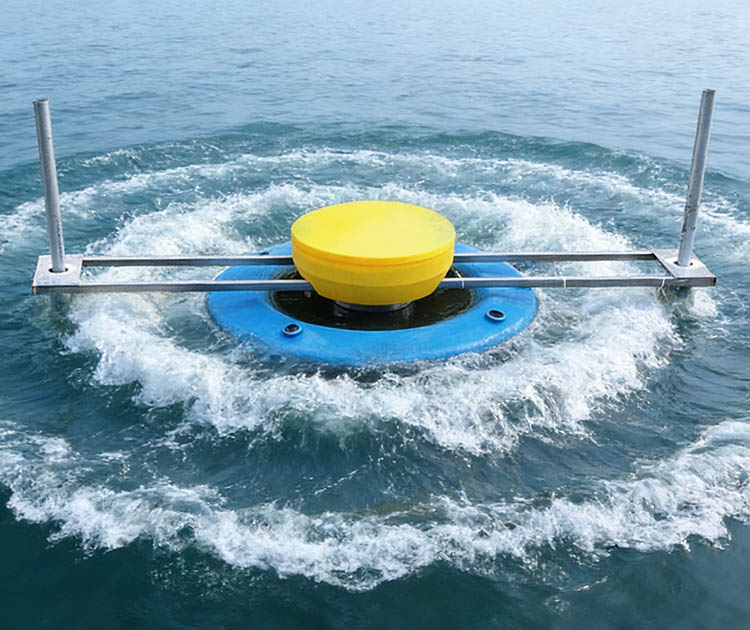
Wave-inducing machines are a new type of aeration machinery for pond aquaculture developed and promoted in recent years, representing a replacement for impeller-type aerators.
Their working mechanism utilizes a floating impeller to lift water from the center and create waves that spread outwards, increasing the intensity of sunlight reaching the water and promoting algae growth, thus fully utilizing the pond's ecological aeration capacity. Currently, there are no reports on the application of wave-inducing machines in aquaculture. To further investigate the practical application value of wave-inducing machines in aquaculture, this paper uses Litopenaeus vannamei as the culture medium to study the aeration capacity of wave-inducing machines during the culture process, comparing it with traditional paddlewheel aerators, and providing a new approach to aeration in shrimp farming.